Development of a Battery Management System (BMS) for Electric Commercial Vehicles
Research Achievements | Electric Commercial Vehicle Battery Management System (BMS) Development
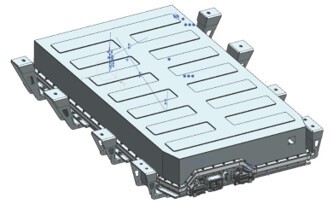
Figure 1. 3D Model of the Battery Pack
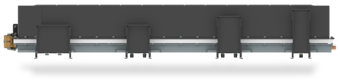
Figure 2. Battery Pack Layout
I. Project Overview
Building upon its experience in developing three-electric-system (e-powertrain) technologies for electric commercial trucks, the Intelligent Vehicle Research and Development Center has integrated domestically produced battery cells with vehicle development technologies to independently develop battery packs and a Battery Management System (BMS) for electric commercial vehicles.
This project focuses on the development of a battery system for a 2.5-ton electric commercial vehicle. Following the automotive V-model development process, the project completed the design of the battery pack system, BMS control strategies, State of X (SOX) estimation algorithms, and the development and validation of the thermal management system. These achievements have established the Center's capabilities in the integration and testing of battery systems for electric commercial vehicles.
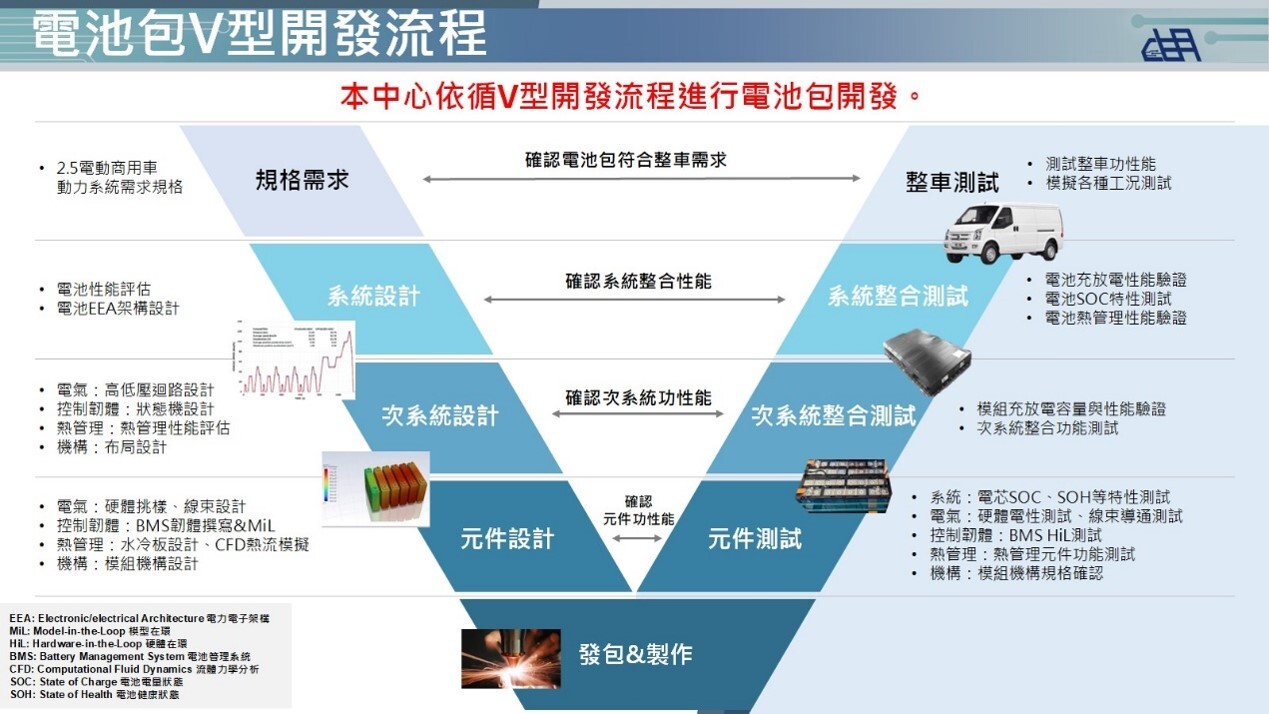
Figure 3. V-Model Development Process for the Battery Pack
II. Technical Development Highlights
1. Battery Pack System Development
Based on vehicle operating conditions and power requirements, the Center designed the battery pack specifications and overall system architecture, including battery module configuration, high- and low-voltage electrical architecture, mechanical layout, and thermal management design.
The FEVB1 battery pack utilizes lithium iron phosphate (LFP) battery cells manufactured by Xing Intelligent. The system integrates key components including the battery enclosure, main output connector, charging connector, Manual Service Disconnect (MSD), Battery Junction Box (BJB), Battery Management Unit (BMU), and Cell Monitoring Unit (CMU), providing the safety, reliability, and system integration required for commercial vehicle applications.
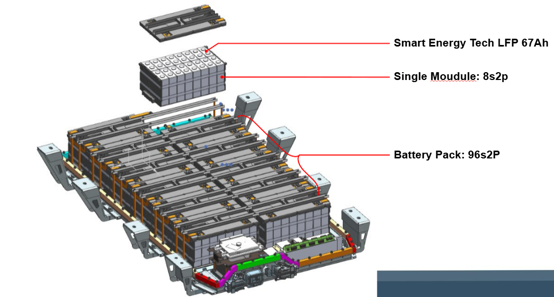
Figure 4. FEVB1 System Architecture
2. Battery Management System (BMS) Development
The Battery Management System (BMS) was developed following the automotive V-model development process. System functional requirements were translated into a state-machine architecture covering major operating modes, including Sleep, Initialization, Standby, Discharge, and Charging.
The control firmware was developed using a Model-Based Development (MBD) approach and validated through both Model-in-the-Loop (MiL) and Hardware-in-the-Loop (HiL) testing. Validation included signal simulation and subsystem integration tests for controllers such as the BMU, CMU, and BJB to verify that the control logic and system responses satisfied the design requirements.
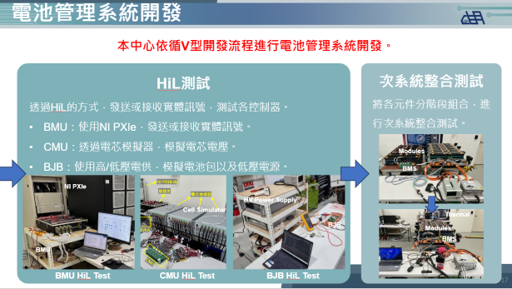
Figure 5. Battery Management System (BMS) Development Process
3. Development of SOX Estimation Algorithms
To improve battery system safety and the accuracy of driving-range prediction, the Center developed State of Charge (SOC) and State of Health (SOH) estimation algorithms.
The SOC estimation algorithm employs the Coulomb Counting method with Open-Circuit Voltage (OCV)-SOC curve correction to enhance estimation accuracy. The SOH estimation algorithm estimates battery health based on the Coulomb Counting method and the SOH–Cycle relationship. Both algorithms were calibrated and validated using charge/discharge data collected from battery cell and module testing.
4. Thermal Management System Development
To address the high-load and low-temperature operating conditions of commercial vehicles, the Center developed a cooling and heating liquid-circulation system. A one-dimensional thermal model and a Computational Fluid Dynamics (CFD) thermal-flow simulation model were established to evaluate and optimize the thermal performance of the battery system.
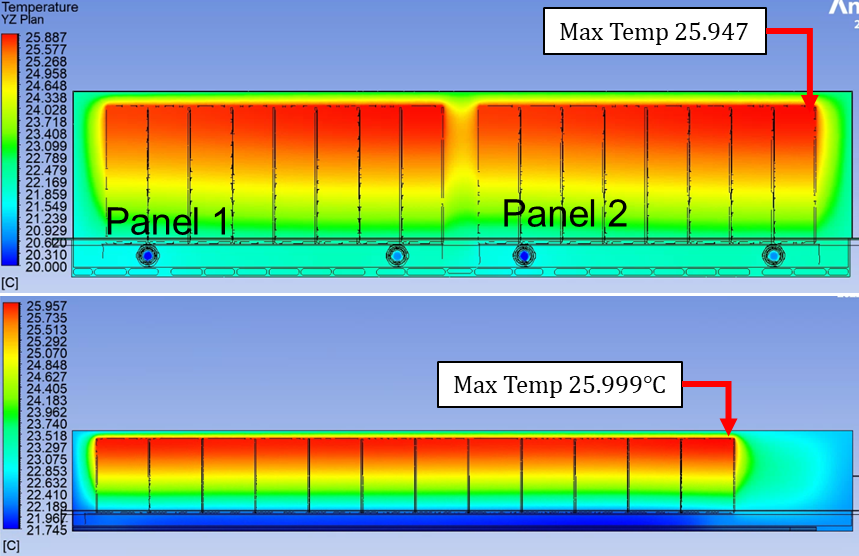
Figure 6. CFD Thermal Simulation Results of the Battery Pack
The thermal management system adopts an aluminum liquid-cooling plate design to provide both battery cooling and low-temperature heating capabilities. Through experimental data calibration and simulation analysis, the system can effectively evaluate the thermal performance of the battery pack under various operating conditions.
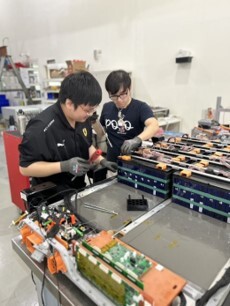
Figure 7. Battery Pack Prototype Fabrication and Assembly Validation
III. Key Features
| Function | Description |
|---|---|
| Charge/Discharge Management | Provides the maximum available charging and discharging power based on battery cell conditions and supports CCS2 DC fast charging. |
| Cooling and Heating | Utilizes a liquid-cooling plate to provide battery cooling and temperature regulation under various operating conditions. |
| State of Charge (SOC) Estimation | Estimates the battery's state of charge using the Coulomb Counting method with Open-Circuit Voltage (OCV) correction. |
| State of Health (SOH) Estimation | Estimates battery health based on the Coulomb Counting method and battery degradation (life-cycle) curves. |
| Cell Balancing | Employs a passive cell balancing mechanism to maintain voltage consistency among battery cells. |
| Insulation Monitoring | Monitors the insulation integrity between the high-voltage and low-voltage electrical systems to ensure operational safety. |
| High-Voltage Interlock (HVIL) | Verifies the integrity of high-voltage connector connections to ensure system safety. |
| Fault Protection | Incorporates multiple protection mechanisms to enhance the safety and reliability of the battery system. |
IV. Research Achievements
The Center has completed the design of the FEVB1 battery pack and subsystem integration testing, while establishing core technologies for the Battery Management System (BMS), SOX estimation algorithms, and the thermal management system.
The major research achievements are as follows:
- Completed the design and system integration of a 2.5-ton electric commercial vehicle battery pack.
- Established an independently developed BMS control strategy and software architecture.
- Completed Model-Based Development (MBD) of the BMS, together with Model-in-the-Loop (MiL) and Hardware-in-the-Loop (HiL) validation.
- Developed and validated State of Charge (SOC) and State of Health (SOH) estimation algorithms.
- Completed the design of the cooling and heating liquid-circulation system, a one-dimensional thermal model, and Computational Fluid Dynamics (CFD) thermal-flow analysis.
- Established in-house capabilities for the independent development, system integration, and testing of battery packs for electric commercial vehicles.
V. Future Outlook
The Center will continue to conduct comprehensive battery pack integration testing and in-vehicle validation to further enhance the safety, reliability, and performance of battery systems for electric commercial vehicles. In addition, it will promote the industrial deployment and commercialization of domestically developed battery pack and Battery Management System (BMS) technologies, supporting the advancement of Taiwan's electric commercial vehicle industry.